


 32.1k
32.1k42 Comments
Next up

 wenda_whitecat
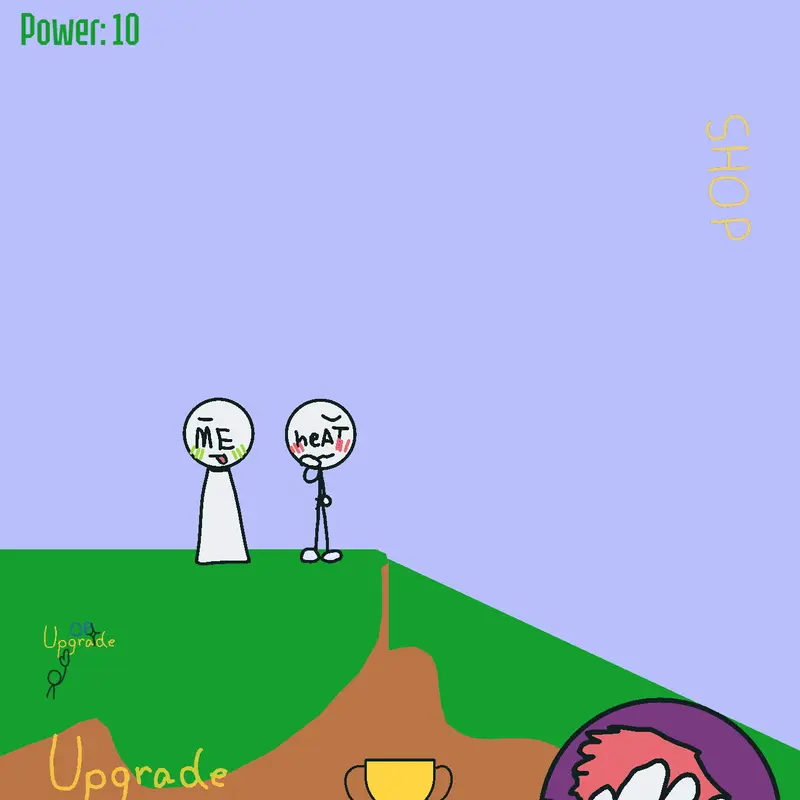
#cool #sprunki #antiheat #slapgame
More #slapgame games ↓
In thermodynamics, heat is energy in transfer between a thermodynamic system and its surroundings by such mechanisms as thermal conduction, electromagnetic radiation, and friction, which are microscopic in nature, involving sub-atomic, atomic, or molecular particles, or small surface irregularities, as distinct from the macroscopic modes of energy transfer, which are thermodynamic work and transfer of matter.[1] For a closed system (transfer of matter excluded), the heat involved in a process is the difference in internal energy between the final and initial states of a system, after subtracting the work done in the process.[2] For a closed system, this is the formulation of the first law of thermodynamics.
 2Reply
..m
 1Reply
Bro ded
 1Reply
How are you still alive after all the damage I did to you
 1Reply
???
Reply

LAUCHEEEER
Reply
More #slapgame games
Slap a verity@lukelovescastle
Godzilla vs banana Cat@anonymous-user-9b02ac2b-0096-4e3a-8c05-51b0c1a28170
Godzilla slap in you@anonymous-user-9b02ac2b-0096-4e3a-8c05-51b0c1a28170
OP Upgrader: Earning the coins by 10000 it...@Bass_Of_BASE_2025
ksnwsnsksk Is a #BludObby!!!@AidamRamiro
Px Family slap game@cat_px
This is kinda stolen so yeah..@Abstract_cat_thingy
Slap the guy cheat edition@matthew_TheblueThing